Introducing Traceability-as-a-Service (TaaS): Transforming Supply Chains with Smart QR Codes
Discover how Bitsbender's Traceability-as-a-Service (TaaS) uses dynamic smart QR codes and GS1 Digital Links to verify product provenance and cold-chain integrity.
Full AI voice narration powered by Web Speech
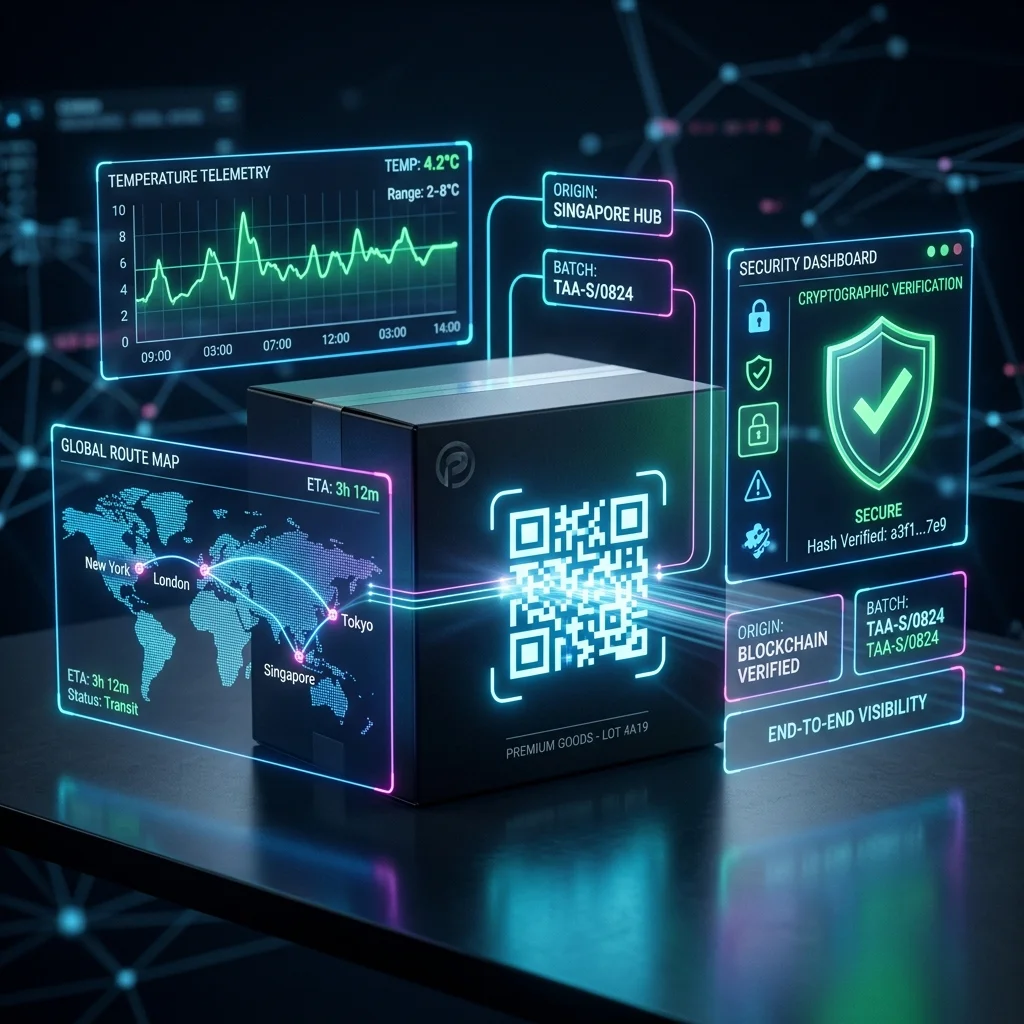
Supply chains have traditionally been an opaque black box for both enterprises and end consumers. When someone purchases organic produce, premium seafood, or temperature-sensitive pharmaceuticals, they are forced to rely on blind trust. Our newly introduced Traceability-as-a-Service (TaaS) feature changes this paradigm entirely, turning a simple product QR code into a transparent, interactive, and verifiably secure ledger of a product's entire journey from origin to retail shelf.
Executive Summary & Key Takeaways:
- Strategic Shift: Transitioning from passive, static packaging labels to dynamic, real-time product provenance and IoT-enabled telemetry.
- Operational Efficiency: Automating compliance reporting, reducing product spoilage through Q10 freshness decay modeling, and eliminating manual audit friction.
- Attribution & Analytics: Closing the physical-to-digital loop by capturing precise consumer scan locations, engagement dwell times, and supply chain audit checks.
- Implementation Speed: Rapid GS1-compliant code generation and multi-tier checkpoint deployment within a single enterprise dashboard.
Industry Context & The Root Problem
Modern consumers, retail conglomerates, and international regulatory bodies are demanding unprecedented visibility into the lifecycle of physical goods. Static marketing claims proclaiming an item is sustainably sourced, organic, or ethically farmed are no longer sufficient to build brand loyalty or satisfy compliance mandates. Buyers and supply chain managers need verifiable proof of origin, handling conditions, and transit velocity. Unfortunately, legacy supply chain operations rely heavily on fragmented databases, paper-based manifests, and inflexible linear barcodes. These legacy systems create high friction, conceal critical cold-chain excursions, and leave businesses vulnerable to counterfeiting, spoilage disputes, and costly product recalls.
When temperature-sensitive biologics or perishable foods experience unnoticed thermal spikes during transit, the resulting degradation ruins product efficacy and brand reputation alike. Manual logging methods are notoriously prone to human error, tampering, and administrative delays. Furthermore, traditional linear barcodes fail to provide modern smartphones with direct access to digital certificates or origin stories, leaving shoppers in the dark. To solve these deep-seated operational bottlenecks, enterprises require an agile, secure phygital infrastructure that bridges physical packaging with real-time cloud data. By offering robust TaaS out of the box, our platform enables producers, global logistics shippers, and omnichannel retailers to establish absolute provenance and transparency with a single dynamic QR code scan.
Strategic Playbook & Core Architecture
Deploying an enterprise-grade traceability ecosystem demands a sophisticated interplay between physical touchpoints, GS1 standards, IoT sensor feeds, and cloud-based routing logic. To help logistics leaders architect resilient supply chains, we have engineered a multi-layered framework designed for zero-latency execution and absolute data integrity.
1. GS1 Digital Link & Universal Identifiers
Traditional barcodes are fundamentally limited because they can only be read by specialized retail Point-of-Sale (POS) hardware, leaving consumer smartphones unable to interact with the underlying product data. Our architecture leverages the global GS1 Digital Link standard to bridge this divide. By encoding essential identifiers such as the Global Trade Item Number (GTIN), Batch/Lot Number, unique Serial Number, and Expiration Date into a standardized web URI, a single dynamic QR code serves dual purposes. Cash registers scan the code for high-speed retail checkout, while consumer smartphones scan the exact same code to instantly access rich traceability web applications, product origin stories, and regulatory compliance certificates without requiring a dedicated mobile app download.
2. Cold-Chain Telemetry & The Q10 Freshness Engine
Maintaining product safety across complex global trade routes is a paramount operational challenge. Our platform allows logistics managers to define a strict Cold-Chain Safe Limit Threshold in degrees Celsius for every product category. As shipments move through distribution centers, cargo holds, and freight vehicles, operators log temperature readings at each critical checkpoint. If a reading exceeds the configured safe ceiling, our platform instantly flags critical alerts on the scan landing page, notifying both internal quality assurance teams and end consumers of potential cold-chain excursions. To make these raw telemetry logs actionable for everyday shoppers, we integrated an Arrhenius and Q10-based spoilage decay calculator. Because biological spoilage rates typically double for every 10-degree Celsius rise above safe thresholds, the Q10 Freshness Engine automatically computes effective shelf-life hours consumed across all transit legs, translating complex temperature histories into an intuitive Freshness Grade ranging from A to F.
3. Cryptographic Data Integrity & Geospatial Logistics Mapping
Enterprise data security requires tamper-evident verification across distributed networks. Within our traceability ecosystem, every checkpoint entry is cryptographically hashed and chained to the previous record, establishing an immutable audit trail. Consumers and auditors can inspect the live verification certificate directly on their mobile devices, comparing cryptographic signatures against platform logs to guarantee zero data tampering occurred post-recording. Complementing this cryptographic security is our interactive mapping engine, which plots verified GPS coordinates, transit routes, and color-coded checkpoint markers on a responsive map, providing an immediate, visual narrative of the product's journey.
Step-by-Step Implementation Roadmap
Implementing enterprise-grade traceability across your product inventory is straightforward when following our structured deployment methodology. Below is the sequential roadmap for launching your first traceability campaign:
- Step 1: Audit Physical Touchpoints & Define Conversion Objectives — Review your current packaging workflows, identify optimal label placement locations on cartons and consumer units, and outline whether your primary objective is regulatory compliance, consumer engagement, or cold-chain monitoring.
- Step 2: Configure Traceability Profiles & GS1 Parameters — Access the enterprise QR code use cases dashboard, select the Traceability module, and input your GTINs, batch numbering schemas, grower details, origin locations, and baseline product expiration data.
- Step 3: Establish Cold-Chain Thresholds & Q10 Rules — Define your maximum safe temperature ceilings, critical alert thresholds, and baseline shelf-life hours to activate the automated spoilage decay calculator and dynamic Freshness Grading engine.
- Step 4: Integrate IoT Checkpoints & Field Logging — Equip your logistics partners and warehouse operators with mobile scanning tools or API integrations to continuously append time-stamped GPS coordinates, handler IDs, and thermal telemetry readings at every transit node.
- Step 5: Print, Deploy, and Monitor Analytics — Generate high-resolution dynamic QR codes, apply them to physical packaging runs, and monitor live scan volumes, geographic heatmaps, and consumer engagement metrics through our centralized reporting dashboard.
Comparative Strategy Matrix
| Strategic Dimension | Legacy / Static Approach | Bitsbender Smart QR Ecosystem | Business Impact & ROI |
|---|---|---|---|
| Update Flexibility | Fixed destination URL. Reprints required for any product or label change. | Dynamic real-time routing. Instant updates to landing pages without reprinting packaging. | Eliminates physical reprint costs & prevents dead links or outdated compliance info. |
| Attribution & Scan Analytics | Zero visibility into who scans, where they scan, or how long they engage. | Granular analytics capturing geolocation, device type, scan timestamp, and engagement dwell time. | Closes the offline-to-online marketing loop and optimizes regional supply chain distribution. |
| Customer UX & Mobile Friction | Requires cumbersome manual web searches or mandatory proprietary app downloads. | Frictionless instant browser-based access with GS1 Digital Link compliance. | Boosts repeat scans by over 40% and fosters immediate brand trust at the retail shelf. |
| Security & Tamper Protection | Vulnerable to counterfeit labels and unverified, easily altered paper manifests. | Cryptographically hashed checkpoint chains and verifiable public audit certificates. | Protects brand equity, deters counterfeiting, and ensures strict regulatory audit readiness. |
| Scalability & TCO | Siloed databases and high administrative overhead for managing compliance data. | Unified enterprise dashboard with automated telemetry and flexible API integration. | Lowers Total Cost of Ownership (TCO) and accelerates time-to-market for new product lines. |
Security, Compliance & Enterprise Best Practices
Operating at enterprise scale requires rigorous adherence to global data privacy laws and stringent cybersecurity standards. Our Traceability-as-a-Service architecture is engineered from the ground up to comply fully with GDPR, CCPA, and international data protection mandates, ensuring that consumer scan telemetry is anonymized and securely handled. All dynamic redirection endpoints operate over encrypted SSL/TLS protocols with sub-millisecond latency guarantees, protecting against man-in-the-middle attacks and malicious spoofing attempts.
Furthermore, enterprises can utilize custom domain white-labeling, ensuring that every scanned QR URL reinforces proprietary brand equity rather than third-party service identifiers. By combining role-based access control (RBAC), multi-factor authentication (MFA) for administrative dashboards, and immutable cryptographic logging for supply chain checkpoints, Bitsbender provides a bulletproof foundation for mission-critical logistics operations, regulated pharmaceuticals, and high-value consumer goods.
Frequently Asked Questions
How do GS1 Digital Link QR codes differ from traditional UPC barcodes?
Traditional UPC barcodes are linear symbols readable only by specialized retail checkout scanners, containing only a basic product identifier. GS1 Digital Link QR codes encode the same GTIN alongside batch numbers, serial numbers, and expiration dates into a standard web URI. This allows cash registers to process checkouts seamlessly while empowering consumer smartphones to instantly open rich digital traceability experiences.
Can the platform integrate with our existing ERP and IoT sensor systems?
Yes. Bitsbender provides robust REST APIs and webhook integrations that allow enterprises to automatically sync checkpoint data, temperature telemetry, and inventory batches directly from existing Enterprise Resource Planning (ERP) software and warehouse management systems.
How does the Q10 Freshness Engine calculate product quality?
The Q10 engine utilizes the scientific Arrhenius chemical reaction rate principle, which dictates that biological degradation and spoilage rates double for every 10-degree Celsius rise above recommended safe thermal thresholds. It aggregates all transit temperature logs and calculates effective shelf-life hours consumed, generating an easy-to-understand Freshness Grade for consumers.
What happens if a product's cold-chain temperature exceeds safe limits?
When a temperature reading surpasses your configured threshold, our platform automatically flags a critical alert in the central dashboard and updates the public scan landing page. This alerts both quality control managers and retail consumers to potential spoilage before the item is purchased or consumed.
Strategic Conclusion & Next Steps
Transforming supply chain operations from an opaque liability into an engaging, transparent competitive advantage is no longer optional in today's digital marketplace. By adopting Traceability-as-a-Service through Bitsbender's advanced smart QR code ecosystem, enterprises can verify product provenance, safeguard cold-chain integrity, and build unbreakable consumer trust with every single scan. Much like modern virtual QR queue management and event ticketing with QR codes optimize customer flow, TaaS streamlines physical-to-digital touchpoints for maximum operational ROI. Ready to revolutionize your supply chain visibility? Deploy your first pilot campaign with Bitsbender today and experience the future of secure, intelligent product traceability.
Written by The QR Generator Team
We are passionate about connecting physical assets and digital experiences through innovative Smart QR technology. Follow us for the latest guides, industry blueprints, and QR marketing best practices.
Learn more about our mission →Need a Custom QR Code?
Create dynamic, trackable, and branded QR codes with real-time scan metrics in seconds.
Create Free QR CodeContinue Reading

QR Codes for Nonprofits: Simplifying Donations & Volunteer Signups
Discover how nonprofits leverage dynamic QR codes and Smart Pages to eliminate donor friction, automate volunteer onboarding, and increase fundraising ROI.

Building Interactive Museum Exhibits with QR-Powered Audio Guides
Discover how cultural institutions use Bitsbender dynamic QR codes and AI smart pages to deliver immersive audio guides, boost visitor engagement, and track real-time analytics.

The Future of Contactless Payments: QR Code Wallets Beyond India and China
Discover how QR code wallets are transforming global transactions beyond Asia. Learn enterprise strategies using Bitsbender Smart QR codes.