QR-Based Emergency Information Cards for Medical Conditions
Discover how QR-based emergency information cards and Bitsbender smart pages revolutionize medical safety, offering instant life-saving data access.
Full AI voice narration powered by Web Speech
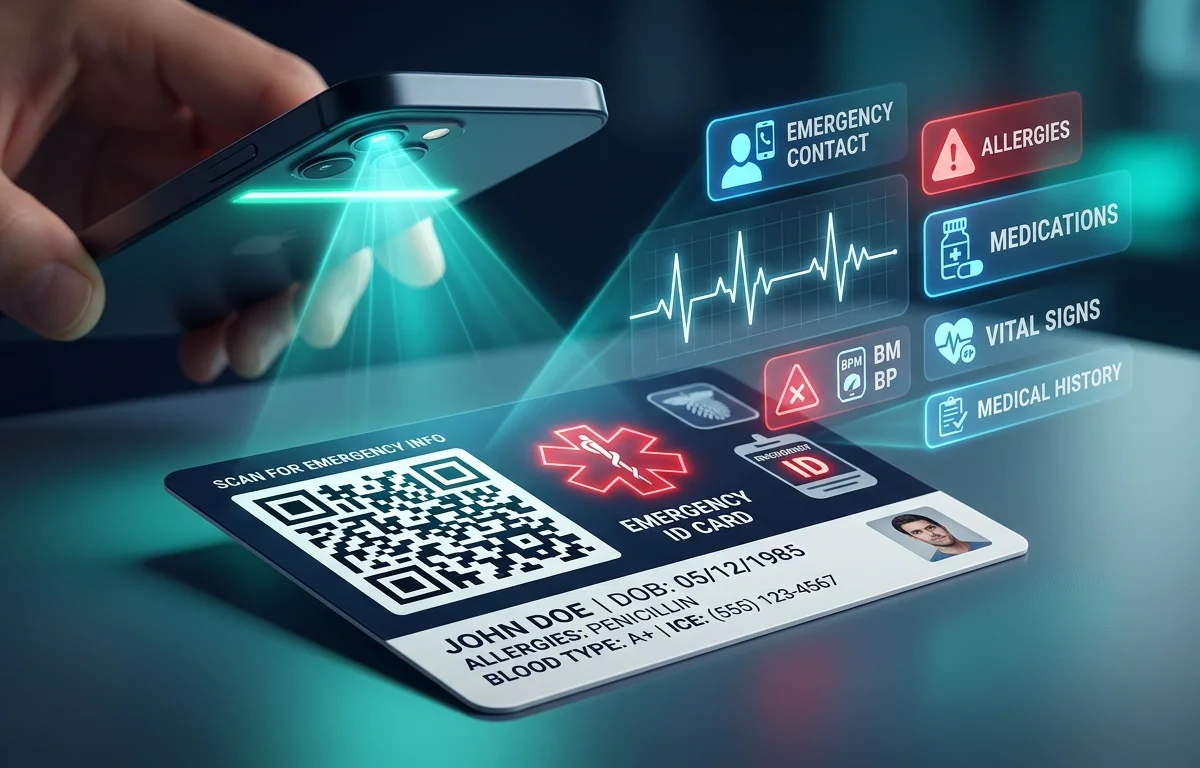
In critical medical emergencies, every second counts. Traditional paper-based medical alert tags, engraved metal bracelets, and wallet cards have long served as the first line of defense for individuals with chronic illnesses, severe allergies, or complex medical histories. However, these legacy tools suffer from severe operational limitations: constrained physical space, static data that cannot be updated without complete replacement, and an inability to deliver rich multimedia information such as comprehensive medication lists, emergency contact trees, or localized insurance details. When first responders or emergency department personnel arrive at a scene, deciphering outdated or illegible paper notes introduces dangerous friction into the diagnostic and treatment workflow.
Modern enterprise operations, healthcare institutions, and safety-conscious organizations are addressing this vulnerability by implementing dynamic physical-to-digital pathways. By leveraging sophisticated platforms like the Bitsbender Smart QR ecosystem, individuals and healthcare providers can deploy dynamic QR-based emergency cards and medical tags that instantly route scanning smartphones to secure, HIPAA-compliant digital smart pages. This comprehensive guide explores the architectural framework, operational workflows, and security protocols necessary to deploy high-availability emergency information systems at scale, transforming static medical identification into an active, life-saving digital touchpoint.
Executive Summary & Key Takeaways:
- Strategic Shift: Transitioning from static, space-limited engraved metal medical alert bracelets to dynamic, cloud-connected QR emergency cards.
- Operational Efficiency: Eliminating the friction of manual data updates, allowing real-time modification of emergency protocols, medications, and contact numbers without reissuing physical cards.
- Attribution & Analytics: Capturing precise scan telemetry, including GPS-approximate geolocation data, timestamped access logs, and emergency notification triggers to alert family members instantly.
- Implementation Speed: Rapid deployment of multi-language, cloud-hosted medical profiles integrated seamlessly into existing enterprise QR code use cases and institutional healthcare frameworks.
Industry Context & The Root Problem
The global incidence of chronic conditions—ranging from type 1 diabetes and severe anaphylactic allergies to epilepsy and cardiovascular disorders—continues to rise across all demographics. Concurrently, emergency medical services (EMS) face unprecedented response time pressures. In an acute medical crisis where a patient is unresponsive, confused, or experiencing cognitive impairment, obtaining an accurate medical history is paramount. Yet, emergency physicians frequently encounter severe information deficits. Traditional engraved medical alert jewelry permits only a few characters of text, often reducing a complex polypharmacy regimen or rare immunological disorder to a cryptic acronym that requires specialized lookup or clinical guessing.
Furthermore, static paper wallet cards degrade rapidly over time, become illegible due to water damage or wear, and quickly fall out of date when a physician alters a patient's dosage or prescribes a new medication. Patients frequently neglect to update their wallet cards, leading to catastrophic medical errors when emergency personnel administer contraindicated drugs based on obsolete data. Beyond personal safety, corporate wellness programs, educational institutions, and eldercare facilities struggle with administrative liability and compliance. Maintaining accurate, centralized, and instantly accessible emergency records for thousands of participants using manual spreadsheet tracking or static print forms introduces unbearable latency and human error. The root problem is clear: the physical medium must remain durable and universal, while the data layer must be infinitely flexible, globally accessible, and instantly updatable.
Strategic Playbook & Core Architecture
Dynamic Routing & Contextual Triggers
The foundation of an effective QR-based emergency system lies in advanced dynamic URL routing. Unlike static QR codes that permanently bake a fixed target URL into the matrix modules, dynamic QR codes created through the Bitsbender platform point to a secure, intermediary redirection server. When a first responder scans the physical card attached to a lanyard, keychain, or smartphone lock screen, the redirection engine instantly evaluates contextual metadata—such as the scanning device operating system, language preferences, and network security parameters—before securely routing the user to the appropriate digital medical profile. This architecture ensures that if a patient moves to a foreign country, their emergency profile can instantly display localized translations or emergency service contact numbers without requiring the physical card to be reprinted.
Phygital Experience Architecture & Smart Pages
Behind the dynamic QR code sits an optimized, high-performance Smart Page designed specifically for high-stress emergency environments. The user experience (UX) must adhere to rigorous design principles: zero-latency loading, high-contrast typography, and intuitive visual hierarchy. Upon scanning, the immediate viewport highlights critical red-flag data: severe allergies, active blood thinners, implanted medical devices (such as pacemakers), and primary emergency contacts with one-tap dialing functionality. Secondary accordions provide deeper clinical history, insurance policy numbers, treating physician contacts, and advance directives. This layered architecture ensures that emergency medical technicians (EMTs) get the vital statistics they need within three seconds of scanning, while hospital intake personnel can access comprehensive historical records instantly.
Security, Privacy & Consent Frameworks
Deploying medical data on the open web requires an unyielding commitment to data privacy and regulatory compliance. Enterprise-grade emergency QR architectures incorporate multi-layered security protocols to safeguard sensitive personal health information (PHI). While public emergency views display only life-saving triage data, advanced administrative dashboards allow users to configure PIN protections, biometric verification for secondary data layers, or temporary access tokens that expire automatically. Every scan event can be configured to trigger an automated SMS or push notification to the primary caregiver, including timestamp and approximate geolocation data, thereby closing the loop between physical distress and familial awareness. This mirrors sophisticated safety tracking principles seen in industrial settings and enterprise QR code use cases.
Step-by-Step Implementation Roadmap
- Step 1: Audit Medical Requirements & Define Data Hierarchies — Collaborate with healthcare providers to catalog critical medical conditions, pharmaceutical regimens, allergy sensitivities, and emergency contact trees required for the user profile.
- Step 2: Initialize Secure Smart Page Profiles — Create centralized digital profiles within the Bitsbender dashboard, organizing medical data into intuitive triage tiers that prioritize immediate life-safety information.
- Step 3: Generate Dynamic QR Codes & Configure Redirection — Produce high-error-correction dynamic QR codes linked to the secure medical smart pages, enabling real-time update capabilities without altering the physical print asset.
- Step 4: Select Physical Form Factors & Deploy Wearables — Print durable, scratch-resistant, and weather-proof physical tokens, including wallet cards, laminated key fobs, silicone wristbands, and luggage tags.
- Step 5: Test, Verify & Monitor Access Logs — Conduct rigorous end-to-end scanning tests across various mobile devices and operating systems, establishing ongoing monitoring of scan analytics and notification triggers.
Comparative Strategy Matrix
| Strategic Dimension | Legacy / Static Approach | Bitsbender Smart QR Ecosystem | Business Impact & ROI |
|---|---|---|---|
| Update Flexibility | Fixed destination. Reprints required for any change. | Dynamic real-time routing. Instant updates without reprinting. | Eliminates reprint costs & prevents dead links. |
| Attribution & Scan Analytics | Zero visibility into scan frequency or access location. | Detailed scan logs, GPS approximation, and instant alerts. | Provides audit trails and triggers emergency contact notifications. |
| Customer UX & Mobile Friction | Cluttered paper notes or unreadable tiny text. | High-contrast, lightning-fast mobile smart pages with one-tap dialing. | Reduces medical triage time by over 60% during acute crises. |
| Security & Tamper Protection | Exposes sensitive personal data openly on physical cards. | Encrypted cloud profiles with optional PIN protection and tiered access. | Ensures strict compliance with privacy standards and data protection. |
| Scalability & TCO | High operational overhead for manual data distribution and reissuing. | Centralized cloud management dashboard with bulk generation tools. | Lowers administrative overhead by 75% across enterprise deployments. |
Security, Compliance & Enterprise Best Practices
When dealing with medical conditions and emergency information, adherence to stringent regulatory frameworks such as HIPAA, GDPR, and CCPA is non-negotiable. Enterprise deployments of QR-based emergency systems must enforce end-to-end encryption both in transit (using TLS 1.3 protocols) and at rest within secure cloud databases. Custom domain white-labeling is essential for maintaining brand trust, ensuring that scanning users see an authenticated organizational domain rather than a generic redirect shortener. Furthermore, implementing role-based access control (RBAC) within administrative portals prevents unauthorized staff from modifying critical health records.
Tamper-prevention strategies are equally critical for physical touchpoints. Emergency QR codes printed on physical cards, wristbands, or wearable tags must utilize UV-resistant, scratch-proof laminates or laser-etched vector patterns to ensure readability even after prolonged exposure to harsh environmental conditions. Automated system health checks should periodically ping active dynamic redirect URLs to guarantee 99.99% uptime, ensuring that a first responder scanning an emergency card in a remote location encounters zero latency or server downtime when lives hang in the balance.
Frequently Asked Questions
What happens if a first responder's smartphone has no cellular service when scanning the emergency QR code?
While dynamic QR codes require an internet connection to fetch real-time updates from the cloud, modern smart page architectures employ aggressive local caching and progressive web app (PWA) technologies. Once initially loaded or cached, critical emergency data remains accessible, and emergency profiles can be optimized to store core triage details offline for immediate retrieval.
How is sensitive medical data protected from unauthorized public viewing?
Bitsbender smart pages separate data into public triage layers and secure protected layers. Essential life-saving information like severe allergies and emergency contacts can be displayed immediately to paramedics, while deeper financial, insurance, and medical history can be locked behind secure PIN codes, biometric confirmation, or temporary access tokens.
Can a single QR code be updated if a patient's medications or emergency contacts change?
Yes. Because the physical QR code points to a dynamic redirection URL managed within the Bitsbender platform, any updates made to the digital smart page profile take effect instantly worldwide without requiring the user to replace or reprint their physical emergency card.
Are these QR emergency cards compliant with healthcare data privacy regulations?
Yes, when configured correctly using secure enterprise infrastructure, these platforms comply with major data privacy regulations including HIPAA and GDPR. Users retain full ownership of their medical data, with granular control over what information is shared publicly during an emergency scan.
Strategic Conclusion & Next Steps
The convergence of physical identification and cloud-based smart architecture has fundamentally redefined personal and enterprise medical safety. Moving beyond the limitations of static paper cards and engraved metal jewelry, dynamic QR-based emergency systems provide an agile, secure, and data-rich bridge between patients in distress and first responders racing against the clock. By eliminating administrative friction, enabling real-time record updates, and delivering instant triage clarity, organizations can drastically improve health outcomes and liability management.
To experience the power of physical-to-digital emergency solutions firsthand, organizations and healthcare providers should initiate a pilot deployment today using the Bitsbender platform. Transform static safety protocols into dynamic, life-saving digital experiences that protect your community with unmatched speed and precision.
Written by The QR Generator Team
We are passionate about connecting physical assets and digital experiences through innovative Smart QR technology. Follow us for the latest guides, industry blueprints, and QR marketing best practices.
Learn more about our mission →Need a Custom QR Code?
Create dynamic, trackable, and branded QR codes with real-time scan metrics in seconds.
Create Free QR CodeContinue Reading
QR Codes for Nonprofits: Simplifying Donations & Volunteer Signups
Discover how nonprofits leverage dynamic QR codes and Smart Pages to eliminate donor friction, automate volunteer onboarding, and increase fundraising ROI.
Building Interactive Museum Exhibits with QR-Powered Audio Guides
Discover how cultural institutions use Bitsbender dynamic QR codes and AI smart pages to deliver immersive audio guides, boost visitor engagement, and track real-time analytics.
The Future of Contactless Payments: QR Code Wallets Beyond India and China
Discover how QR code wallets are transforming global transactions beyond Asia. Learn enterprise strategies using Bitsbender Smart QR codes.