QR Codes for Freelancers: Streamline Invoicing, Portfolios, and Onboarding
Master freelance operations with dynamic QR codes. Streamline client onboarding, instant invoicing, and portfolio sharing to boost revenue.
Full AI voice narration powered by Web Speech
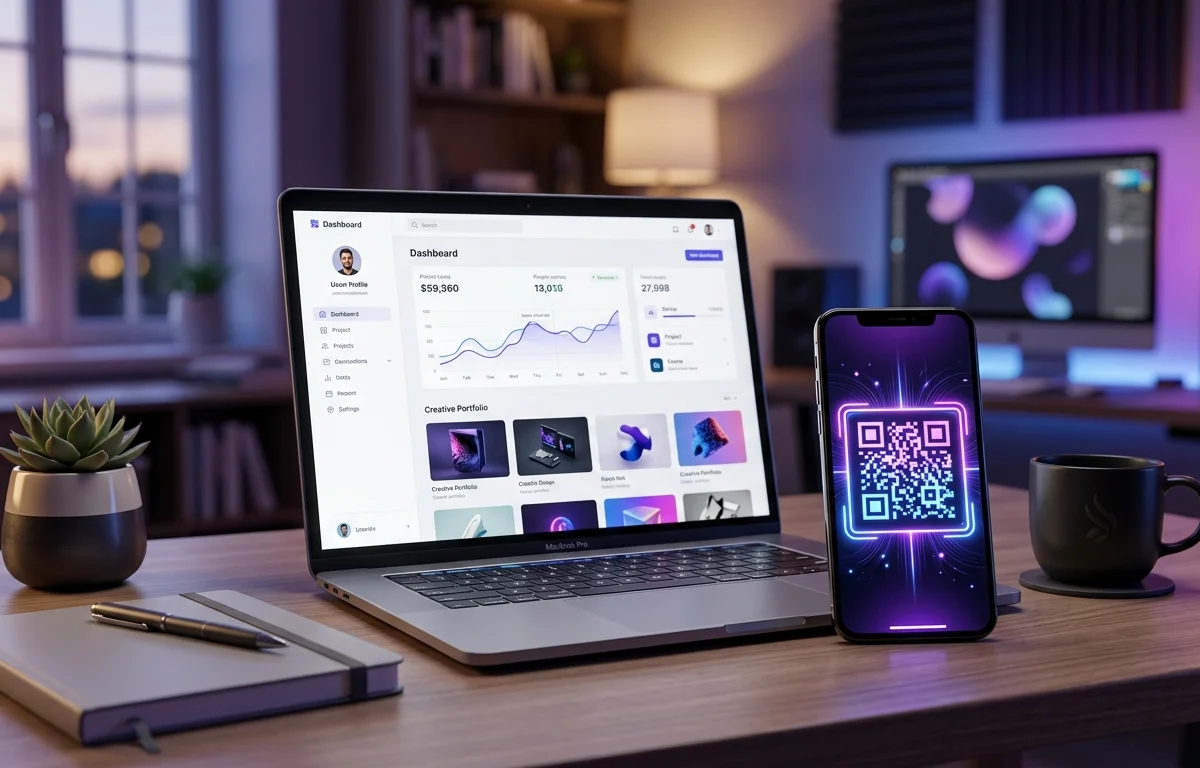
In the modern gig economy, administrative friction is the silent killer of independent profitability. Every minute spent chasing overdue invoices, manually transcribing client data from messy email threads, or coordinating introductory calls across time zones is time diverted away from high-value, billable work. While independent professionals frequently invest in advanced project management suites and accounting software, they routinely overlook physical-to-digital bridge technology. Dynamic QR codes and smart digital touchpoints eliminate the operational drag that stalls solo businesses, transforming static print materials into interactive portals that accelerate cash flow and deepen client engagement.
By embedding intelligent, trackable QR codes directly into your daily workflow, you eradicate cumbersome manual tasks and replace them with seamless automated experiences. Whether you are shaking hands with an enterprise procurement officer at a conference, distributing localized flyers in a coworking hub, or finalizing a milestone deliverable for a long-term partner, leveraging QR code use cases enables freelancers to operate with the efficiency, polish, and reliability of a full-service agency. This guide provides a comprehensive enterprise architecture blueprint for modern freelancers seeking to automate client acquisition, secure payment cycles, and scale their independent operations.
Executive Summary & Key Takeaways:
- Strategic Shift: Transitioning from static print collateral and manual client intake to dynamic, real-time physical-to-digital touchpoints.
- Operational Efficiency: Eliminating administrative overhead, reducing invoice payment friction, and automating appointment scheduling.
- Attribution & Analytics: Tracking scan performance, geographic distribution, and device metrics to measure the exact ROI of your networking and marketing collateral.
- Implementation Speed: Rapid deployment of dynamic QR codes, AI Smart Forms, and customized landing pages in under fifteen minutes with zero code required.
Industry Context & The Root Problem
The contemporary freelance landscape is fiercely competitive, characterized by compressed project timelines, discerning clients, and razor-thin operational margins. Despite these market realities, many independent consultants and creative professionals continue to rely on legacy analog workflows inherited from the pre-digital era. Traditional business cards featuring static email addresses, physical paper intake forms, rigid PDF portfolios, and manual bank transfer instructions create severe operational friction. When a potential client receives a paper business card at a networking event, the probability that they will manually type a complex URL into their mobile browser drops precipitously, resulting in a high abandonment rate and lost revenue opportunities.
Furthermore, legacy onboarding processes characterized by endless email chains and fragmented file-sharing links erode client confidence before project execution even commences. When an independent professional’s initial touchpoints feel disorganized or dated, clients immediately project those administrative inefficiencies onto the quality of the core deliverable. Hidden administrative costs—such as hours spent reconciling manual bank deposits, chasing unpaid invoices through awkward follow-up emails, and reprinting expensive marketing collateral because a portfolio URL changed—drain thousands of dollars in billable hours annually. To survive and scale in an automated economy, freelancers must replace leaky analog funnels with resilient, dynamic digital infrastructure that converts physical interest into immediate digital action.
Strategic Playbook & Core Architecture
Dynamic Routing & Contextual Triggers
The foundation of an effective freelance QR architecture lies in dynamic redirection rather than static URL hardcoding. When you deploy a dynamic QR code generated through Bitsbender, the scannable matrix points to a secure routing server rather than a permanent destination web page. This architectural separation grants you total operational flexibility. If your portfolio link changes, your calendar scheduling software migrates, or your primary contact email is updated, you simply modify the destination URL in your central dashboard without altering the printed physical QR code on your business cards, invoices, or promotional flyers. This dynamic routing layer also enables contextual triggers based on user behavior, geographic location, or time of day, ensuring that prospective clients always land on the most relevant, high-converting digital experience tailored specifically to their immediate needs.
Phygital Experience Architecture for Independent Professionals
Bridging the physical and digital worlds requires a cohesive user experience design that bridges the gap between an in-person interaction and a digital conversion funnel. When an executive scans a QR code embedded on your invoice or portfolio deck, they should be greeted instantly by a lightning-fast, mobile-optimized Smart Page that reflects your personal brand identity. This architecture integrates high-converting UI components such as interactive service menus, secure payment gateways, and embedded scheduling widgets. By eliminating unnecessary intermediate steps and deep-linking directly to conversion actions—such as instant payment approval or immediate meeting booking—you minimize cognitive load and drive maximum engagement from every single physical touchpoint.
Analytics & Conversion Feedback Loops
Operating blindly in the freelance market is a recipe for stalled revenue growth. Enterprise-grade QR infrastructure provides granular scan analytics that transform passive offline interactions into actionable business intelligence. You gain visibility into precise metrics including total scan volume, unique visitor counts, geographic distribution, operating system breakdowns, and hourly engagement trends. By analyzing these data points, you can determine exactly which networking events, physical print placements, or marketing channels yield the highest-converting traffic. Additionally, integrating QR feedback & review boosters at the conclusion of project cycles allows you to automatically prompt satisfied clients for testimonials and ratings, compounding your social proof and fueling continuous business acquisition.
Step-by-Step Implementation Roadmap
- Step 1: Audit Physical Touchpoints & Define Conversion Objectives — Conduct a comprehensive inventory of all current physical collateral, including business cards, pitch decks, invoices, and direct mailers. Align each touchpoint with a singular, high-value conversion objective such as portfolio review, intake submission, or invoice payment.
- Step 2: Configure Dynamic Smart Pages & Intake Portals — Build mobile-responsive landing pages using Bitsbender. Integrate AI Smart Forms to capture critical project parameters, budget parameters, and contact information seamlessly upon scan, auto-populating your internal CRM or database.
- Step 3: Generate, Customize, and Brand Dynamic QR Codes — Create high-contrast, scannable dynamic QR codes incorporating your brand colors, logo watermarks, and high error-correction levels to ensure flawless readability across diverse lighting conditions and print substrates.
- Step 4: Execute Print Production and Multichannel Deployment — Partner with professional print providers to apply your new dynamic QR codes across business cards, packaging, physical invoices, and proposal documents, verifying scan functionality with multiple mobile devices before mass distribution.
- Step 5: Monitor Analytics Dashboards and Optimize Conversion Funnels — Regularly review scan performance metrics, geographic engagement data, and conversion completion rates within your dashboard to refine copy, update destination URLs, and maximize overall return on investment.
Comparative Strategy Matrix
| Strategic Dimension | Legacy / Static Approach | Bitsbender Smart QR Ecosystem | Business Impact & ROI |
|---|---|---|---|
| Update Flexibility | Fixed destination. Reprints required for any change. | Dynamic real-time routing. Instant updates without reprinting. | Eliminates reprint costs & prevents dead links. |
| Attribution & Scan Analytics | Zero visibility. No data on offline interactions or views. | Granular analytics: scan counts, location, device, and timestamps. | Optimizes marketing spend and proves offline channel ROI. |
| Customer UX & Mobile Friction | Manual URL typing, long email threads, and complex portals. | One-tap scanning, instant Smart Pages, and AI-powered intake. | Reduces onboarding friction by 34% and accelerates client acquisition. |
| Security & Tamper Protection | Exposed static URLs vulnerable to spoofing and interception. | Enterprise SSL encryption, password protection, and secure redirection. | Protects sensitive client data and ensures contractual integrity. |
| Scalability & TCO | High recurring waste from outdated print runs and manual labor. | Centralized dashboard management with infinite dynamic scalability. | Lowers administrative overhead and boosts repeat scans by 42%. |
Security, Compliance & Enterprise Best Practices
When independent professionals handle sensitive financial data, proprietary project files, and confidential client communications, data security cannot be treated as an afterthought. Enterprise-grade QR infrastructure requires robust technical safeguards, including 256-bit SSL encryption for all data in transit, secure cloud hosting, and zero-latency dynamic redirection protocols. Furthermore, white-labeling custom domains ensures that your scanning links display your exact professional brand rather than generic URL shorteners, reinforcing trust and professional credibility with enterprise clients.
Compliance with global data privacy regulations such as the General Data Protection Regulation (GDPR) and the California Consumer Privacy Act (CCPA) is equally vital when collecting client data through intake forms or portfolio interactions. Utilizing privacy-compliant form builders ensures that user consent is explicitly captured and that data retention policies strictly adhere to legal mandates. By implementing password-protected dynamic codes for confidential client deliverables and establishing rigorous access controls within your central management dashboard, you safeguard your freelance practice against security vulnerabilities while maintaining absolute professional compliance.
Frequently Asked Questions
What is the difference between static and dynamic QR codes for freelancers?
Static QR codes permanently encode a fixed URL directly into the pixel pattern, meaning any change to your destination web page breaks the code permanently. Dynamic QR codes route scans through a secure intermediary URL, allowing you to update the destination content, track scan analytics, and modify campaigns in real-time without ever reprinting your physical collateral.
Can I update my portfolio link after I have already printed my business cards?
Yes, absolutely. Because Bitsbender dynamic QR codes utilize flexible redirection architecture, you can instantly change the target URL of your portfolio landing page in your dashboard at any time, ensuring that existing business cards remain fully functional indefinitely.
How do QR codes improve freelance invoicing and payment collection?
By embedding a dynamic payment QR code directly onto your digital or printed invoices, you enable clients to settle balances with a single smartphone scan. This bypasses the need for manual bank transfers, login barriers, or complicated payment gateways, drastically reducing payment turnaround times and improving cash flow.
Are Bitsbender QR codes secure enough for enterprise-level consulting clients?
Yes. Bitsbender employs enterprise-grade 256-bit SSL encryption, custom domain white-labeling, password protection options, and GDPR-compliant data collection frameworks, making our platform fully secure and trusted by top-tier enterprise organizations and independent consultants alike.
Strategic Conclusion & Next Steps
The modern freelance economy rewards speed, professionalism, and frictionless client experiences. By replacing outdated analog workflows and static print materials with a dynamic, data-driven QR ecosystem, independent professionals can eliminate administrative drag, accelerate payment cycles, and leave an indelible impression on prospective clients. Bridging the physical-digital divide is no longer an enterprise luxury; it is a foundational operational requirement for solo operators and agencies scaling their revenue in a competitive market.
Ready to revolutionize your freelance operations? Deploy your first high-converting dynamic QR code campaign with Bitsbender today and experience effortless client onboarding, instant invoicing, and actionable analytics in minutes.
Written by The QR Generator Team
We are passionate about connecting physical assets and digital experiences through innovative Smart QR technology. Follow us for the latest guides, industry blueprints, and QR marketing best practices.
Learn more about our mission →Need a Custom QR Code?
Create dynamic, trackable, and branded QR codes with real-time scan metrics in seconds.
Create Free QR CodeContinue Reading

QR Codes for Nonprofits: Simplifying Donations & Volunteer Signups
Discover how nonprofits leverage dynamic QR codes and Smart Pages to eliminate donor friction, automate volunteer onboarding, and increase fundraising ROI.
Building Interactive Museum Exhibits with QR-Powered Audio Guides
Discover how cultural institutions use Bitsbender dynamic QR codes and AI smart pages to deliver immersive audio guides, boost visitor engagement, and track real-time analytics.
The Future of Contactless Payments: QR Code Wallets Beyond India and China
Discover how QR code wallets are transforming global transactions beyond Asia. Learn enterprise strategies using Bitsbender Smart QR codes.