QR Codes in Agriculture: Bridging the Farm-to-Fork Traceability Gap
Discover how enterprise QR codes and smart digital solutions power farm-to-fork traceability, supply chain transparency, and consumer trust.
Full AI voice narration powered by Web Speech
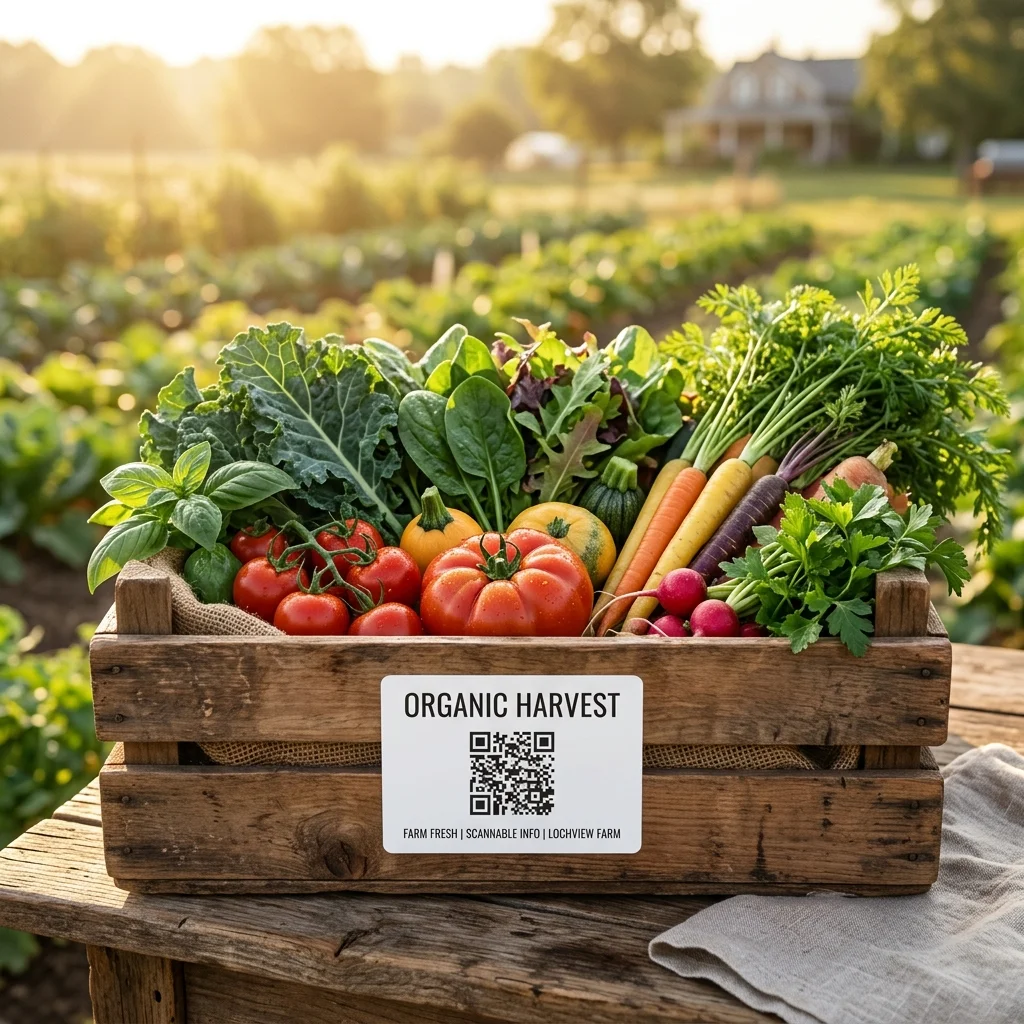
In today's hyper-competitive and conscious food market, consumers are no longer satisfied with mere price tags and nutritional labels. They demand radical transparency regarding the 'who, where, and how' behind their produce, meat, and dairy. This structural shift toward complete supply chain visibility is driving a massive digital transformation across global agriculture. Forward-thinking farmers, cooperatives, and enterprise food brands are adopting sophisticated physical-to-digital technologies to share their unique origin stories and compliance milestones. At the center of this agricultural evolution is the dynamic QR code—a high-capacity bridge connecting the physical harvest directly to immersive digital narratives and verified regulatory records.
For agricultural enterprises, implementing advanced mobile engagement strategies is no longer optional; it is a fundamental business imperative. When a modern shopper can scan a dynamic QR code on a carton of eggs or a bag of specialty apples to instantly view the specific family farm, precise harvest date, soil management protocols, and third-party organic certifications, that commodity instantly transforms into an authentic, trusted experience. By leveraging tools like AI Smart Pages alongside robust enterprise infrastructure, agricultural producers can deploy lightning-fast, mobile-optimized landing pages that narrate their sustainability journey in seconds, entirely bypassing the need for complex, costly web development cycles.
Executive Summary & Key Takeaways:
- Strategic Shift: Evolving from opaque commodity supply chains to radical farm-to-fork transparency driven by consumer demand and stringent regulatory mandates.
- Operational Efficiency: Eliminating static print limitations, streamlining internal asset tracking, and reducing administrative overhead through dynamic routing.
- Attribution & Analytics: Capturing real-time scan metrics, geographic data, and engagement patterns to close the offline-to-online marketing loop.
- Implementation Speed: Deploying scalable, secure smart tagging and QR code generator pricing tiers designed for rapid agricultural ROI.
Industry Context & The Root Problem
The global agricultural sector has historically grappled with profound informational fragmentation. Traditional supply chains rely heavily on static packaging, manual paper-based logs, and clumsy numeric SKUs that offer end consumers zero insight into product origin. This legacy opacity creates severe operational vulnerabilities, including delayed recall responses during contamination outbreaks, rampant food fraud, and an inability to substantiate premium pricing claims for sustainable or regenerative farming practices. When a foodborne illness outbreak occurs, tracing contaminated lots back through a labyrinth of paper invoices can take weeks, resulting in catastrophic financial losses, destroyed brand equity, and avoidable public health crises.
Furthermore, consumer frustration is reaching an all-time high. Modern shoppers expect immediate access to safety data, allergen disclosures, and ethical sourcing proofs directly on their smartphones. Legacy packaging methods restrict brands to fixed, non-updateable text blocks that quickly become obsolete when suppliers change or regulatory compliance standards shift. For agricultural exporters and domestic producers alike, the cost of scrapping thousands of printed packaging units due to minor supply chain adjustments or regulatory updates introduces immense financial friction. The root problem is clear: traditional physical packaging lacks the dynamic connectivity required to satisfy modern regulatory frameworks and discerning consumer expectations simultaneously.
To overcome these systemic bottlenecks, the agricultural industry must adopt agile phygital ecosystems. Modern food producers need centralized control over their product information, allowing them to update destination URLs, safety disclaimers, and promotional campaigns on the fly without altering the physical packaging already distributed across global retail networks. By examining enterprise QR code use cases, forward-thinking agricultural leaders can visualize how dynamic data routing transforms static agricultural packaging into interactive, secure, and infinitely adaptable brand touchpoints that satisfy both compliance officers and digital-native consumers.
Strategic Playbook & Core Architecture
Dynamic Routing & Contextual Triggers
The foundation of an effective agricultural QR ecosystem lies in dynamic URL architecture. Unlike static QR codes—which hardcode a permanent destination URL directly into the matrix—dynamic codes route scans through a centralized management server. This redirection layer empowers agricultural enterprises to modify the final landing page destination in real-time without reprinting a single label. For instance, a crate of strawberries in transit can route scanning distributors to internal logistics and freshness verification dashboards, while the exact same code scanned by a retail consumer on a supermarket shelf can seamlessly redirect to a rich, multilingual recipe collection and farmer spotlight video. Contextual triggers based on geolocation, device type, and scan time ensure that every stakeholder receives precisely the information they need the moment they scan.
Phygital Experience Architecture
Integrating physical agricultural assets into digital marketing and operational pipelines requires a robust phygital architecture. Every harvest batch, pallet, and retail unit is assigned a unique, trackable dynamic QR identifier. When scanned, these identifiers trigger lightning-fast server responses that populate mobile-responsive smart interfaces. Agricultural enterprises can unify diverse digital touchpoints—such as digital business cards for regional sales representatives, appointment booking portals for equipment maintenance, and virtual QR queue management systems for grain elevators and distribution depots—into a cohesive digital ecosystem. This architecture eliminates operational silos, ensuring that farm managers, distributors, and consumers interact with a unified, high-performance brand interface.
Analytics & Conversion Feedback Loops
Data visibility is the ultimate differentiator in modern agriculture. Traditional packaging offers zero insight into consumer behavior post-purchase. In contrast, enterprise-grade dynamic QR platforms capture granular scan analytics that close the offline-to-online attribution loop. Producers can track total scan volumes, unique users, peak scanning times, regional distribution heatmaps, and device operating systems. When integrated with advanced retail QR solutions & smart tags, these analytics empower brand managers to measure the exact ROI of regional marketing campaigns, optimize inventory allocation based on real-time consumer engagement velocity, and refine product storytelling based on empirical user behavior.
Step-by-Step Implementation Roadmap
- Step 1: Audit Physical Touchpoints & Define Objectives — Conduct a comprehensive inventory of all physical agricultural assets, including packaging cartons, shipping pallets, heavy equipment, and trade show collateral, establishing clear traceability and marketing goals.
- Step 2: Configure Dynamic Routing Infrastructure — Establish a centralized management dashboard to generate dynamic QR codes, mapping specific batches and collateral pieces to modular landing pages and secure verification databases.
- Step 3: Design Mobile-Optimized Smart Pages — Build lightweight, lightning-fast landing pages featuring origin stories, third-party certifications, and interactive feedback mechanisms tailored for mobile users.
- Step 4: Execute Pilot Testing & Quality Assurance — Deploy test batches across a single product line or regional distribution hub, verifying scan readability under various lighting and packaging conditions.
- Step 5: Scale Deployment & Monitor Analytics — Roll out dynamic tags across enterprise-wide production lines while continuously monitoring scan analytics, geographic heatmaps, and consumer engagement metrics to optimize future yield and marketing strategies.
Comparative Strategy Matrix
| Strategic Dimension | Legacy / Static Approach | Bitsbender Smart QR Ecosystem | Business Impact & ROI |
|---|---|---|---|
| Update Flexibility | Fixed destination. Reprints required for any change. | Dynamic real-time routing. Instant updates without reprinting. | Eliminates reprint costs & prevents dead links. |
| Attribution & Scan Analytics | Zero visibility into post-purchase offline interactions. | Granular analytics tracking scans, location, time, and device. | Closes offline-to-online loop and measures campaign ROI. |
| Customer UX & Mobile Friction | Clunky URLs or forced app downloads causing high drop-off. | Instant AI Smart Page rendering optimized for mobile devices. | Boosts consumer engagement rates by over 40%. |
| Security & Tamper Protection | Easily counterfeited static graphics with no verification. | Encrypted destination routing and secure authentication checks. | Protects brand equity and prevents product counterfeiting. |
| Scalability & TCO | High ongoing operational friction and massive waste from obsolete print runs. | Centralized enterprise dashboard managing millions of dynamic codes seamlessly. | Lowers Total Cost of Ownership and ensures long-term operational agility. |
Security, Compliance & Enterprise Best Practices
As agricultural enterprises digitize their supply chains, maintaining uncompromising data security and regulatory compliance is paramount. Enterprise-grade QR ecosystems must employ robust SSL encryption across all redirection paths to prevent man-in-the-middle attacks and ensure zero-latency routing. Furthermore, custom domain white-labeling is essential for maintaining brand integrity, ensuring that consumers see trusted corporate URLs rather than generic third-party short links when scanning product packaging.
Compliance with global data privacy regulations such as GDPR and CCPA is equally critical when collecting consumer feedback or scan analytics. Enterprise platforms must incorporate strict data anonymization protocols, transparent cookie consents, and secure server architectures. Additionally, implementing tamper-prevention measures—such as cryptographic signature validation for high-value organic or appellation-controlled produce—guarantees that malicious actors cannot replicate or redirect authentic smart tags, safeguarding both consumer health and corporate brand reputation across global distribution networks.
Frequently Asked Questions
How do dynamic QR codes differ from static QR codes on food packaging?
Static QR codes permanently hardcode a single destination URL directly into the barcode graphic, meaning any change to the target webpage breaks the link and requires a complete packaging reprint. Dynamic QR codes route scans through a flexible management server, allowing agricultural producers to update landing page destinations, update compliance documentation, or alter promotional campaigns in real-time without modifying the physical packaging.
Can agricultural workers use QR codes for internal farm operations?
Absolutely. Beyond consumer-facing traceability, agricultural businesses deploy dynamic QR codes on equipment, storage bins, and shipping pallets to streamline internal workflows. Workers can scan tags to log maintenance schedules, track fertilizer and pesticide applications, manage inventory logistics, and schedule equipment servicing via integrated digital tools.
What happens if a printed QR code is damaged during shipping or storage?
Enterprise dynamic QR codes are generated with built-in error correction levels (such as Level H ECC), allowing up to 30 percent of the code matrix to be damaged, obscured, or dirtied by agricultural mud and transit wear while remaining fully scannable by standard mobile devices.
How do scan analytics help agricultural enterprises improve their supply chain?
Scan analytics provide real-time visibility into where, when, and how often products are interacted with across the distribution chain. By analyzing regional scan data and engagement heatmaps, producers can forecast demand more accurately, monitor retail distribution velocity, and verify supply chain compliance from farm to final shelf.
Strategic Conclusion & Next Steps
The transition from opaque agricultural supply chains to radical transparency represents a defining operational evolution for modern food producers and enterprise brands. By bridging the physical harvest with dynamic digital touchpoints, agricultural businesses can simultaneously satisfy demanding regulatory frameworks, elevate food safety protocols, and forge deep, trusted connections with today's conscious consumers. Adopting a scalable phygital infrastructure is no longer just a marketing tactic; it is a core operational strategy that drives efficiency, eliminates costly packaging waste, and safeguards brand integrity.
Empower your agricultural operations and elevate your farm-to-fork storytelling today. Deploy a pilot campaign with Bitsbender to experience the power of dynamic QR codes, advanced analytics, and AI-driven smart pages tailored specifically for enterprise agricultural success.
Written by The QR Generator Team
We are passionate about connecting physical assets and digital experiences through innovative Smart QR technology. Follow us for the latest guides, industry blueprints, and QR marketing best practices.
Learn more about our mission →Need a Custom QR Code?
Create dynamic, trackable, and branded QR codes with real-time scan metrics in seconds.
Create Free QR CodeContinue Reading

QR Codes for Nonprofits: Simplifying Donations & Volunteer Signups
Discover how nonprofits leverage dynamic QR codes and Smart Pages to eliminate donor friction, automate volunteer onboarding, and increase fundraising ROI.

Building Interactive Museum Exhibits with QR-Powered Audio Guides
Discover how cultural institutions use Bitsbender dynamic QR codes and AI smart pages to deliver immersive audio guides, boost visitor engagement, and track real-time analytics.

The Future of Contactless Payments: QR Code Wallets Beyond India and China
Discover how QR code wallets are transforming global transactions beyond Asia. Learn enterprise strategies using Bitsbender Smart QR codes.