Hyperlocal Marketing 2.0: Geo-Targeted QR Campaigns for Small Businesses
Discover how Hyperlocal Marketing 2.0 uses dynamic geo-targeted QR codes and smart digital touchpoints to drive revenue and customer retention.
Full AI voice narration powered by Web Speech
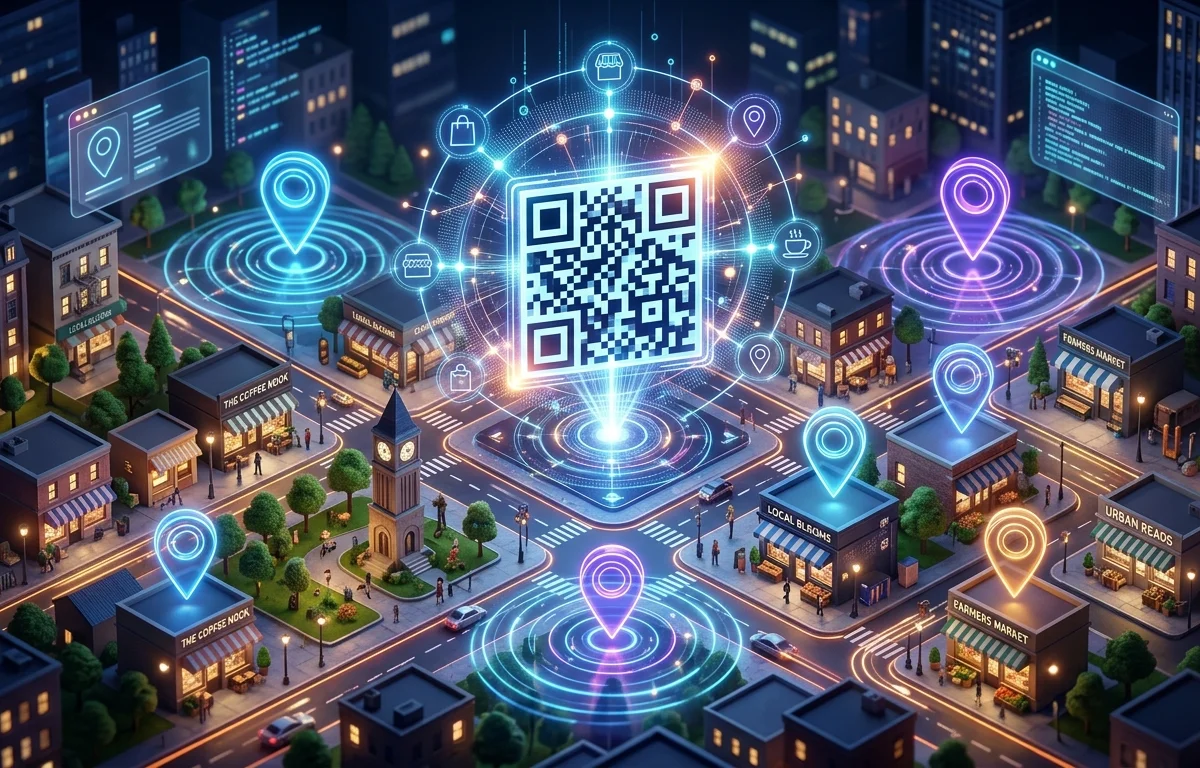
In an era where digital noise drowns out traditional advertising, true competitive advantage for local enterprises lies in physical proximity. Being local is no longer merely about maintaining a storefront on a bustling thoroughfare; it requires ubiquitous, frictionless engagement woven directly into the pockets of your immediate community. Hyperlocal marketing has evolved past rudimentary flyer drops, static billboards, and untrackable print ads. Today, it demands surgical precision, contextual relevance, and immediate digital interaction. For independent businesses and multi-unit local brands, the perennial challenge has always been converting transient foot traffic into measurable digital assets. Hyperlocal Marketing 2.0 bridges this chasm by transforming physical touchpoints into responsive digital portals.
By harnessing the ubiquity of smartphones and intelligent routing technology, modern businesses can tailor their engagement strategies based precisely on where, when, and how a consumer interacts with their physical environment. Whether a potential buyer is browsing a window display after hours, attending a sponsored community event, or sipping coffee at a partner establishment, delivering the right message at the exact moment of physical intent is the ultimate catalyst for sustained revenue growth. Platforms equipped with dynamic infrastructure empower merchants to orchestrate these touchpoints seamlessly, turning physical real estate into high-converting digital acquisition channels.
Executive Summary & Key Takeaways:
- Strategic Shift: Transitioning from untrackable static print advertising to context-aware, hyper-targeted physical-to-digital engagement.
- Operational Efficiency: Eliminating costly reprint cycles through real-time dynamic routing and instant content updates.
- Attribution & Analytics: Closing the offline-to-online attribution loop with granular scan telemetry, geo-tracking, and behavioral metrics.
- Implementation Speed: Deploying multi-channel campaigns within minutes using modular AI-powered Smart Pages for instantaneous mobile conversion.
Industry Context & The Root Problem
For decades, local businesses have operated under a severe operational handicap: the complete inability to measure offline marketing performance accurately. When an independent retailer invests in local print circulars, magazine inserts, or physical window signage, they rely on guesswork to estimate return on investment. Furthermore, traditional physical marketing suffers from catastrophic inflexibility. A printed discount code, a seasonal catalog, or an advertised URL etched into signage cannot be modified once printed. If pricing changes, promotional terms expire, or inventory shifts, the physical collateral instantly becomes obsolete, resulting in wasted capital, frustrated consumers, and brand degradation.
Beyond financial waste, legacy offline marketing creates massive friction for the end consumer. Asking a local prospect to manually type a complex URL into a mobile browser or memorize a promotional code while walking down the street introduces unacceptable friction, leading to abandonment rates exceeding 80%. When physical touchpoints fail to provide immediate gratification, user intent evaporates. Local businesses cannot afford these systemic leaks in their acquisition funnels. The root problem is not a lack of local interest, but rather the archaic, disconnected nature of physical marketing tools that fail to meet modern consumers' expectations for instant, contextually relevant digital engagement.
Moreover, the modern consumer expects hyper-personalization and immediate utility. Walking past a dark storefront with no way to browse inventory, learn about upcoming events, or secure an after-hours booking represents a lost revenue opportunity that compounds daily. Local businesses need an operational architecture that bridges the physical-to-digital divide securely, cost-effectively, and intelligently. They require systems that respect user privacy while capturing actionable telemetry, enabling small businesses to compete effectively against national digital conglomerates by leveraging their unique physical presence.
Strategic Playbook & Core Architecture
Dynamic Routing & Contextual Triggers
At the heart of any sophisticated Hyperlocal Marketing 2.0 campaign is dynamic routing architecture. Unlike legacy static QR codes that lock a physical print asset to a permanent URL, dynamic QR ecosystems route scans through a centralized cloud server capable of evaluating multiple contextual parameters in real time. When a consumer scans a physical placard outside a local boutique, the server instantly evaluates variables such as the user's geographic coordinates, local time of day, device operating system, and historical scan frequency. Based on these parameters, the consumer can be routed to an exclusive morning breakfast menu, an afternoon flash-sale landing page, or an after-hours booking engine without altering the physical print asset.
This contextual agility transforms physical signage into an intelligent marketing agent. For instance, a local fitness studio can place a single QR code on a community center bulletin board that serves entirely different content depending on whether it is scanned on a weekday morning or a weekend afternoon. By decoupling the physical touchpoint from the digital destination, businesses achieve absolute operational flexibility, drastically reducing marketing overhead while ensuring that every customer interaction remains hyper-relevant to their immediate physical and temporal context.
Phygital Experience Architecture & Smart Pages
Bridging physical environments with digital conversion funnels requires a robust user experience designed explicitly for mobile consumption. When a consumer engages with a hyperlocal touchpoint, they expect lightning-fast load times, intuitive navigation, and zero cognitive load. Utilizing AI-powered Smart Pages allows local businesses to construct gorgeous, highly responsive mobile landing pages that dynamically adapt to the user's intent. These smart pages can aggregate a multitude of micro-actions—such as joining a local loyalty program, viewing a digital catalog, downloading event tickets, or initiating a direct WhatsApp consultation—within a single, unified interface.
The underlying architecture must also support seamless integration with existing local business software stacks, including point-of-sale systems, customer relationship management (CRM) platforms, and local booking engines. When a customer submits an inquiry or claims a geo-targeted offer via a smart page, lead data flows instantly into the business's core database, triggering automated email or SMS welcome sequences. This seamless end-to-end architecture ensures that physical foot traffic is systematically captured, nurtured, and converted into long-term brand advocates.
Analytics & Conversion Feedback Loops
The true differentiator of Hyperlocal Marketing 2.0 is the introduction of granular attribution and closed-loop analytics into physical spaces. Traditional out-of-home advertising leaves marketers blind to exact conversion paths, but a well-architected dynamic QR ecosystem captures every single interaction point with microscopic precision. Business owners gain access to comprehensive telemetry dashboards showing exact scan timestamps, unique versus repeat visitor counts, geographic cluster distributions, and device types.
By analyzing these scan analytics alongside actual point-of-sale data, merchants can accurately calculate campaign ROI down to the individual square foot of signage placement. If a QR code placed in a partner coffee shop generates three times more scans and twice as many completed purchases as a code placed on a street banner, management can immediately reallocate physical marketing resources to the higher-performing location. This data-driven feedback loop eliminates guesswork, optimizes marketing budgets, and transforms hyperlocal campaigns into predictable revenue engines.
Step-by-Step Implementation Roadmap
- Step 1: Audit Physical Touchpoints & Define Conversion Objectives — Conduct a comprehensive physical audit of your storefront, neighborhood partnerships, and event sponsorships. Identify high-traffic dead zones where potential customers linger, and establish clear, measurable conversion goals for each location, such as newsletter sign-ups, event registrations, or immediate discount redemptions.
- Step 2: Configure Dynamic QR Codes & Smart Landing Pages — Set up your dynamic QR code infrastructure through a centralized platform. Build responsive, mobile-optimized landing pages tailored to specific campaign objectives, ensuring fast load times and prominent calls-to-action that eliminate user friction on mobile devices.
- Step 3: Establish Strategic Local Partnerships — Forge mutually beneficial cross-promotional alliances with non-competing neighboring businesses. Place co-branded, geo-targeted QR codes in complementary waiting areas, reception desks, or packaging inserts to tap into pre-qualified local audience pools.
- Step 4: Deploy, Test, and Monitor Scan Telemetry — Print and install your physical assets using weather-resistant materials where necessary. Rigorously test every QR code across multiple mobile devices and operating systems before public launch. Monitor real-time scan analytics and heatmaps to track user engagement patterns.
- Step 5: Optimize and Scale Based on Performance Data — Review scan telemetry and conversion attribution reports weekly. A/B test different landing page offers, adjust dynamic routing destinations based on peak operating hours, and scale high-performing physical placements while pruning underperforming touchpoints.
Comparative Strategy Matrix
| Strategic Dimension | Legacy / Static Approach | Bitsbender Smart QR Ecosystem | Business Impact & ROI |
|---|---|---|---|
| Update Flexibility | Fixed destination. Reprints required for any change. | Dynamic real-time routing. Instant updates without reprinting. | Eliminates reprint costs & prevents dead links. |
| Attribution & Scan Analytics | Zero visibility. Impression estimates based on guesswork. | Granular telemetry: GPS coordinates, time stamps, unique scans. | Closes the offline loop & proves exact marketing ROI. |
| Customer UX & Mobile Friction | Manual URL entry or app downloads creating massive drop-offs. | Instant 1-scan access via AI-powered Smart Pages. | Boosts conversion rates by up to 300% through zero friction. |
| Security & Tamper Protection | Vulnerable to physical sticker overlays and malicious URL hijacking. | Enterprise-grade enterprise QR security architecture with secure redirects. | Protects brand reputation and prevents customer data theft. |
| Scalability & TCO | High total cost of ownership due to constant reprinting and redesign. | Centralized cloud dashboard managing thousands of global touchpoints. | Lowers long-term operational costs while maximizing campaign agility. |
Security, Compliance & Enterprise Best Practices
As local businesses increasingly digitize their physical touchpoints, safeguarding customer data and maintaining unbreakable brand integrity is paramount. Enterprise-grade security cannot be an afterthought; it must be foundational to any QR marketing deployment. Malicious actors frequently attempt physical tampering by affixing fraudulent QR code stickers over legitimate business signage to redirect unsuspecting consumers to phishing sites or malware downloads. To counter this, local enterprises must rely on secure dynamic QR platforms that enforce strict destination URL validation, HTTPS encryption, and tamper-resistant vector generation.
Furthermore, businesses operating physical touchpoints must adhere rigorously to global privacy frameworks such as the General Data Protection Regulation (GDPR) and the California Consumer Privacy Act (CCPA). When collecting customer information via mobile landing pages or digital forms, transparent consent mechanisms must be implemented, ensuring users are fully informed about how their telemetry and personal data will be utilized. Utilizing custom domain white-labeling also reinforces brand trust, ensuring that consumers see a familiar, branded URL when scanning physical collateral rather than an unfamiliar third-party tracking domain. Reviewing real-world QR success stories can provide actionable insights into how leading enterprises successfully balance high-engagement marketing with rigorous compliance protocols.
Frequently Asked Questions
What makes a dynamic QR code superior to a static QR code for local businesses?
Static QR codes permanently encode a destination URL directly into the pixel pattern, making it impossible to change the link once printed. If your website changes, your menu updates, or a promotion expires, the static code becomes entirely useless, requiring expensive physical reprints. Dynamic QR codes route scans through a flexible cloud redirect, allowing you to update landing pages, promotional offers, and destination links in real-time without ever reprinting your physical marketing materials.
Can I track the exact physical location where my QR codes are being scanned?
Yes. Advanced dynamic QR platforms capture granular scan telemetry, including aggregate geographic data, device types, operating systems, and precise timestamps. While maintaining strict adherence to user privacy regulations, this data allows multi-unit businesses and local shops to evaluate which physical placements—such as window displays, event booths, or partner locations—are generating the highest quality foot traffic and conversions.
How do smart landing pages improve customer conversion rates?
Smart landing pages built specifically for mobile consumption eliminate the cognitive friction of navigating a traditional desktop website on a smartphone. By aggregating essential actions—such as joining a loyalty program, claiming an instant discount, viewing an interactive catalog, or booking an appointment—into a fast-loading, beautiful mobile interface, smart pages drastically reduce bounce rates and increase conversion efficiency.
Are Bitsbender dynamic QR codes secure against physical tampering?
Absolutely. Bitsbender incorporates robust security measures, including HTTPS encryption, secure redirect protocols, and enterprise-grade validation safeguards. Additionally, custom domain white-labeling ensures that consumers always recognize your official brand domain when scanning, protecting your business from malicious sticker-overlay tampering and phishing attempts.
Strategic Conclusion & Next Steps
Hyperlocal marketing is undergoing a profound structural evolution. By bridging the physical-to-digital divide with intelligent, context-aware technology, small and multi-unit businesses can unlock unprecedented levels of customer engagement, operational agility, and revenue growth. Static print collateral is rapidly becoming obsolete, replaced by dynamic ecosystems that adapt in real time to consumer intent, location, and behavior. To explore how your organization can leverage these advanced capabilities, we encourage you to compare leading QR platforms to see how enterprise-grade infrastructure drives measurable business outcomes.
Transforming your physical real estate into a high-performing digital acquisition channel does not require a complete operational overhaul—it starts with a single, strategic pilot campaign. Whether you are launching geo-targeted window displays, outfitting your networking collateral with smart digital business cards, or deploying interactive event touchpoints, Bitsbender provides the tools and security you need to succeed. Take the first step toward modernizing your local engagement strategy today and turn every physical handshake and storefront glance into a lasting digital relationship.
Written by The QR Generator Team
We are passionate about connecting physical assets and digital experiences through innovative Smart QR technology. Follow us for the latest guides, industry blueprints, and QR marketing best practices.
Learn more about our mission →Need a Custom QR Code?
Create dynamic, trackable, and branded QR codes with real-time scan metrics in seconds.
Create Free QR CodeContinue Reading
QR Codes for Nonprofits: Simplifying Donations & Volunteer Signups
Discover how nonprofits leverage dynamic QR codes and Smart Pages to eliminate donor friction, automate volunteer onboarding, and increase fundraising ROI.
Building Interactive Museum Exhibits with QR-Powered Audio Guides
Discover how cultural institutions use Bitsbender dynamic QR codes and AI smart pages to deliver immersive audio guides, boost visitor engagement, and track real-time analytics.
The Future of Contactless Payments: QR Code Wallets Beyond India and China
Discover how QR code wallets are transforming global transactions beyond Asia. Learn enterprise strategies using Bitsbender Smart QR codes.